
Your Guide to Planning a Durable Concrete Slab This Spring
As the warmer weather finally arrives across Mississauga and the GTA, the season for home improvement and construction begins. If your plans include a new patio, a garage floor, a foundation for an addition, or even a sleek basement floor, the success of your project literally rests on the quality of your concrete slab. A well-planned and professionally executed concrete slab provides decades of stability and value, while a poorly done job can lead to cracks, water issues, and costly repairs down the road.
Getting it right from the start is crucial. This guide will walk you through the key considerations for planning a durable concrete slab for your spring reno, ensuring your investment stands the test of time and the tough Ontario seasons.
Why Spring is the Perfect Season for Concrete Work
Timing is everything when it comes to concrete. While projects can be done at other times of the year, spring offers a unique “Goldilocks” window that is ideal for pouring and curing. The construction industry in our region is heavily influenced by weather, and understanding why spring is optimal can prevent major headaches.
- Moderate Temperatures: Concrete is a chemical reaction, and temperature plays a huge role. The ideal temperature for concrete to cure is between 10°C and 25°C. Spring in Southern Ontario typically provides these moderate temperatures, allowing the concrete to cure gradually and achieve maximum strength.
- Avoiding Extremes: In winter, there's a significant risk of the water in the concrete mix freezing before it has a chance to cure properly. This can permanently weaken the slab. Conversely, the intense heat of a summer day can cause the surface to dry out too quickly, leading to shrinkage cracks and a weaker finish.
- Ground Conditions: The spring thaw means the ground is no longer frozen solid, allowing for proper excavation and preparation of the sub-base—a critical step we'll discuss next. By waiting for the ground to settle, you ensure a more stable foundation for your slab.
The Blueprint for a Long-Lasting Slab: Prep and Materials
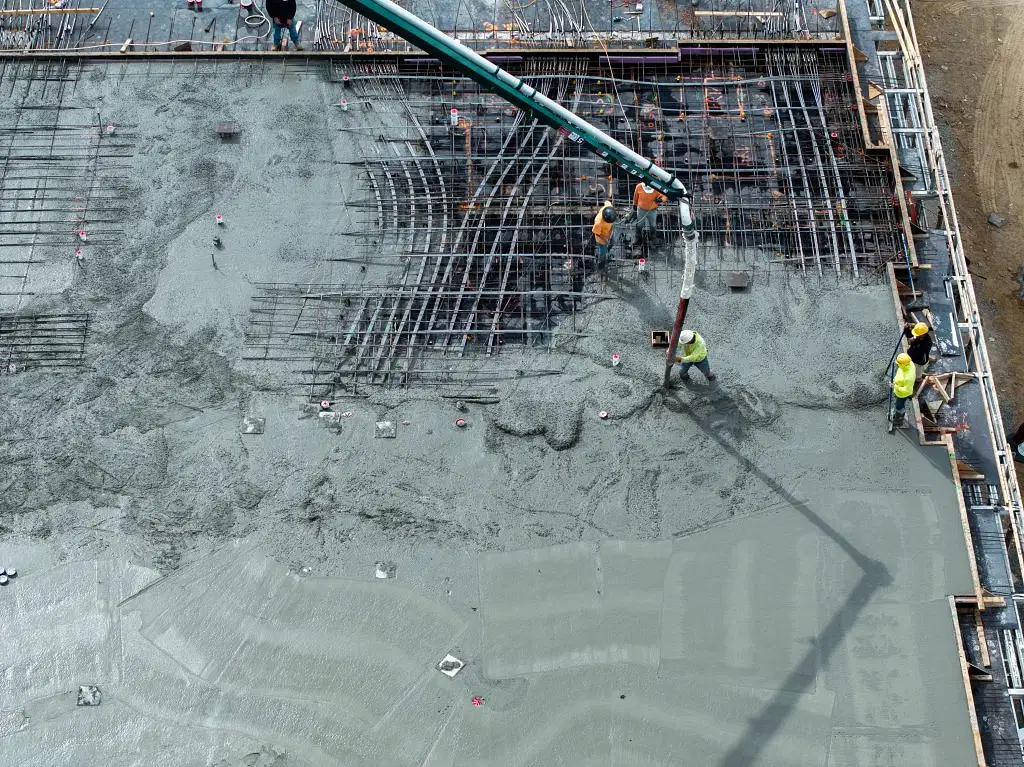
A durable concrete slab isn't just about the pour itself; it's about the meticulous preparation that happens beforehand. This is where professional expertise makes a significant difference, addressing common concerns about quality and longevity.
1. A Solid Sub-Base: You can't build on shaky ground. The first step is to excavate the area to the correct depth and ensure the soil is properly compacted. We then lay and compact a sub-base of granular material, like gravel. This layer is crucial for two reasons: it provides a stable, level surface and promotes proper drainage, which helps prevent shifting and cracking caused by frost heave in the winter.
2. The Right Reinforcement: Concrete has incredible compressive strength (it's hard to crush) but lacks tensile strength (it can be pulled apart). To counteract this, we embed a grid of steel reinforcing bars (rebar) or wire mesh within the slab. This steel skeleton holds the concrete together and drastically increases its ability to handle tension and resist cracking over its lifespan.
3. A Quality Concrete Mix: Not all concrete is created equal. The mix design is tailored to the specific application. For an exterior patio exposed to freeze-thaw cycles, we'll use an air-entrained mix, which contains microscopic air bubbles that give water a place to expand when it freezes. For an interior floor or a heavy-duty garage slab, the strength (measured in megapascals, or MPa) will be different. We work with trusted material suppliers to ensure we're using the precise, high-quality mix your project demands.
The Pour and Cure: Where Professional Skill Shines
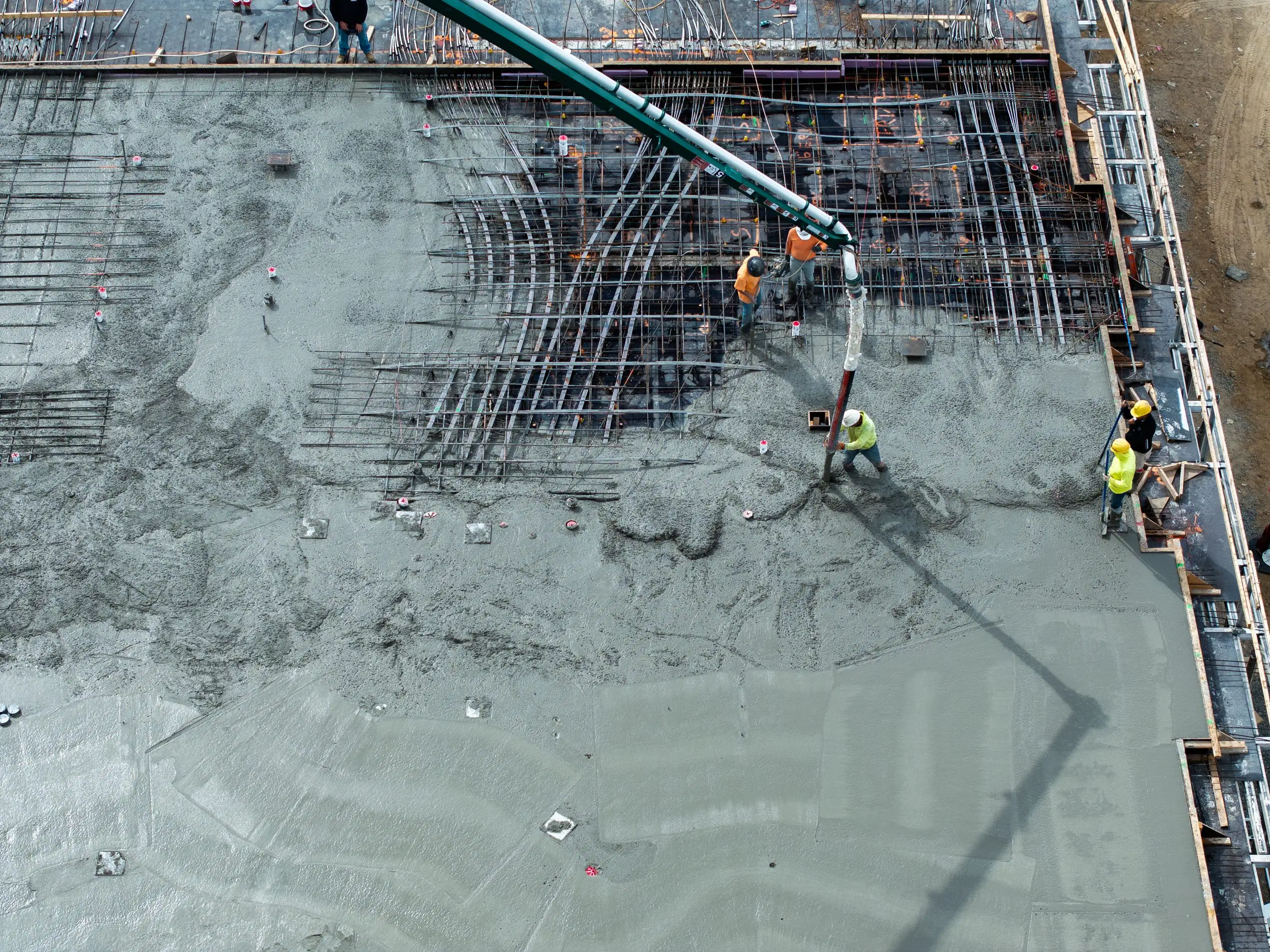
With the prep work complete, the day of the pour is where precision and experience come into play. A professional team ensures the process is smooth, efficient, and sets the stage for a perfect finish.
First, the concrete is poured, spread, and leveled (or 'screeded') to the correct thickness throughout the formwork. Then, our skilled tradespeople begin the finishing process. This involves using various tools to compact the surface, push the larger aggregate down, and bring the smooth 'cream' to the top. The final finish—whether it's a non-slip broom finish for a walkway or a super-smooth trowel finish for a basement—is applied with expert care.
Perhaps the most overlooked but critical phase is curing. Freshly poured concrete needs to retain its moisture to cure properly and reach its designed strength. Simply letting it air dry is a mistake. Proper curing involves protecting the slab from sun and wind and keeping it moist for several days. This slow, controlled hydration process is what minimizes shrinkage cracks and creates a dense, durable, and long-lasting surface. Rushing this step is one of the biggest causes of failure in amateur concrete projects.
Start Your Spring Project on Solid Ground
Planning a successful spring construction project starts from the ground up. By understanding the importance of timing, meticulous preparation, quality materials, and professional execution, you can ensure your new concrete slab provides a safe, stable, and durable base for years to come. Avoiding the common pitfalls of rushing the season or cutting corners on materials is key to protecting your investment.
If you're planning a project in the Mississauga area that requires expert concrete and forming work, our team at S&P Group is here to help. We specialize in high-quality residential and commercial concrete slabs built to withstand the Ontario climate. Contact us today to discuss your project and get a quote.